
Rensaiō
A manga downloader that follows a series once and keeps it up to date from whichever site works.
- Who it is for
- Anyone who follows manga
- What it is
- My fork of the open-source Rensaiō
- My part
- The reliability fixes, the checks and the documentation
- Built with
- .NET · Next.js · Docker
Read it your way
Showing the plain-words view, written so anyone can follow it. Switch to see the technical detail.
Showing the engineering view: names of tools, how the pieces talk and why they were chosen.
Why it exists
Most manga exist on several sites, and sites come and go. The original could download the same chapter from every site, retry a dead site for hours, and fetch extras as if they were chapters. My fork reads your folder first, uses one site per chapter, moves to the next working site when one fails, and keeps the queue moving.
What it does
- 01
It reads your folder first
Chapters you already have are never fetched again.
Chapter numbers are read from many file-name styles before the first download.
- 02
One site per chapter
No duplicate downloads from several sites.
A chapter another source is already downloading is skipped.
- 03
Failover that works
If a site fails, the next working site takes over straight away.
Tried sources are remembered per chapter, so a failed one is never asked twice.
- 04
Only real chapters
Bonus pages, fractions and one-shots are left out.
A chapter filter, with an option to allow x.5 chapters.
- 05
Gaps are filled
A chapter missing in the middle of a series is fetched.
Up to 25 per run, never reaching back before your first chapter.
- 06
No stuck queue
A download that hangs is stopped and tried again later.
A 45-minute watchdog on every download job.
See it
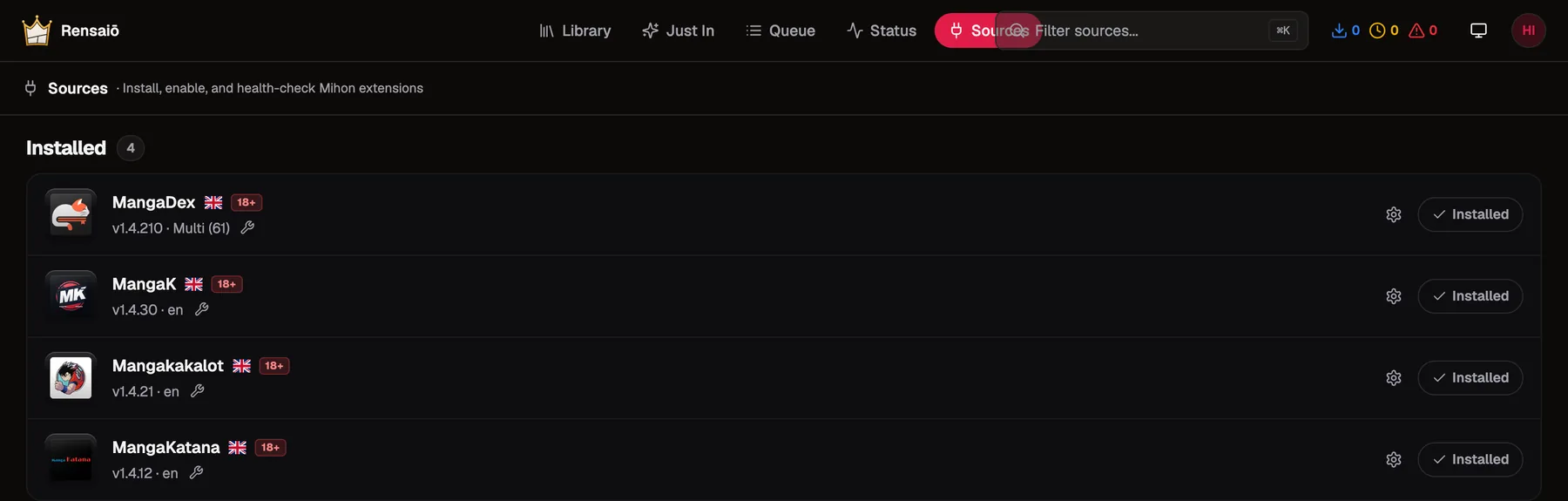
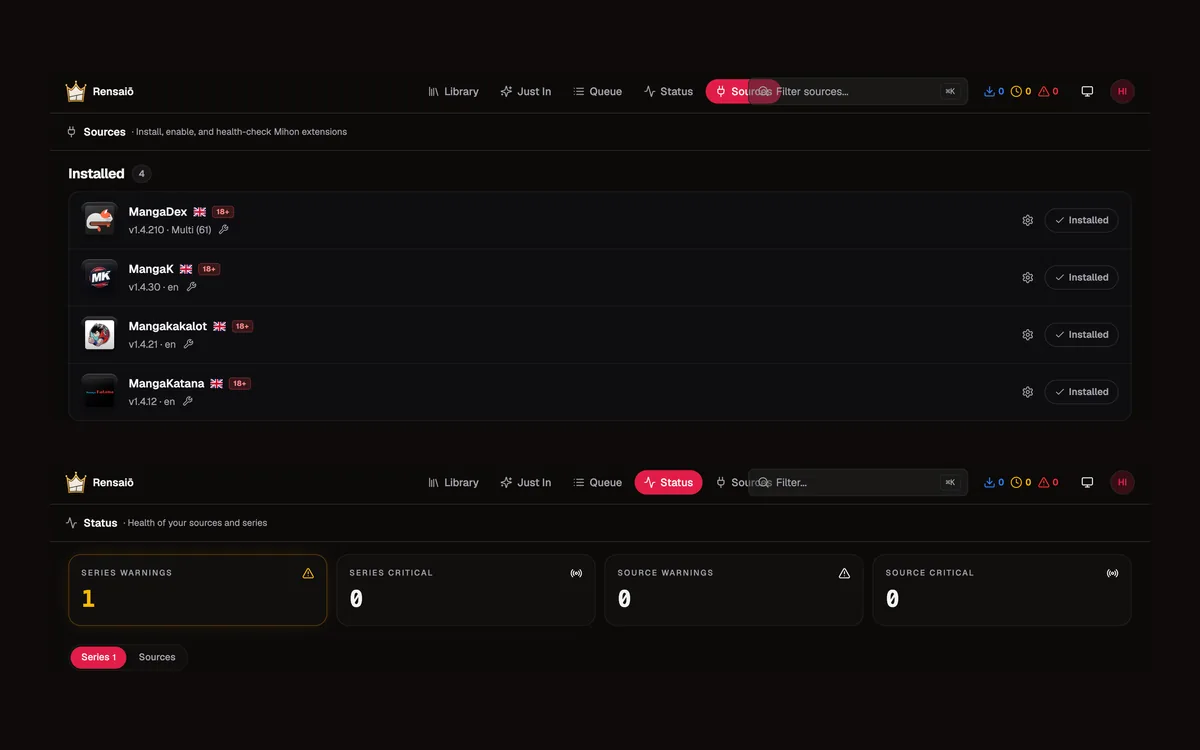
The manga sites you have switched on 
Health of your sources and series
How it works
What happens after you add a manga.
- 1You add a mangaSource searchAnd pick the sites you like.Mihon extensions, installed and health-checked.
- 2It reads your folderChapter parserFinds the chapters already there.Understands Ch.230, c230, Vol.23 Ch.229.
- 3The best site downloads the restOne site per chapterOnly what is missing.The others skip it.
- 4A failure hands overFailoverTo the next working site.Never back to one that failed.
- 5New chapters keep arrivingScheduled updatesAnd gaps are filled.Up to 25 gap chapters per run.
What it is built with
The tools I chose, and the simple reason for each.The stack and why each piece earned its place.
-

ASP.NET Core
The original is a .NET app, so my fixes sit in the same code.
-

Next.js
The web interface you use every day.
-

Docker
One public image for Intel and ARM.
-

GitHub Actions
Builds the image, runs the chapter checks and brings in the original's new work every week.
What I did
- Fixed the repeat downloads, failover and hung downloads.
- Wrote the chapter filter and the gap repair, with checks.
- Moved the library to one manga folder.
- Wrote the documentation and a command-line way to add a series.
By the numbers
- 7fixes over the original
- 15failures before a site is paused
- 45minutes before a hung download is stopped
- 25gap chapters filled per run
Read the docs
Every project has written documentation in plain words. Start at the top and go as deep as you like.
Run it
One Docker command starts it. The image is public: ghcr.io/hikki-dev/rensaio.